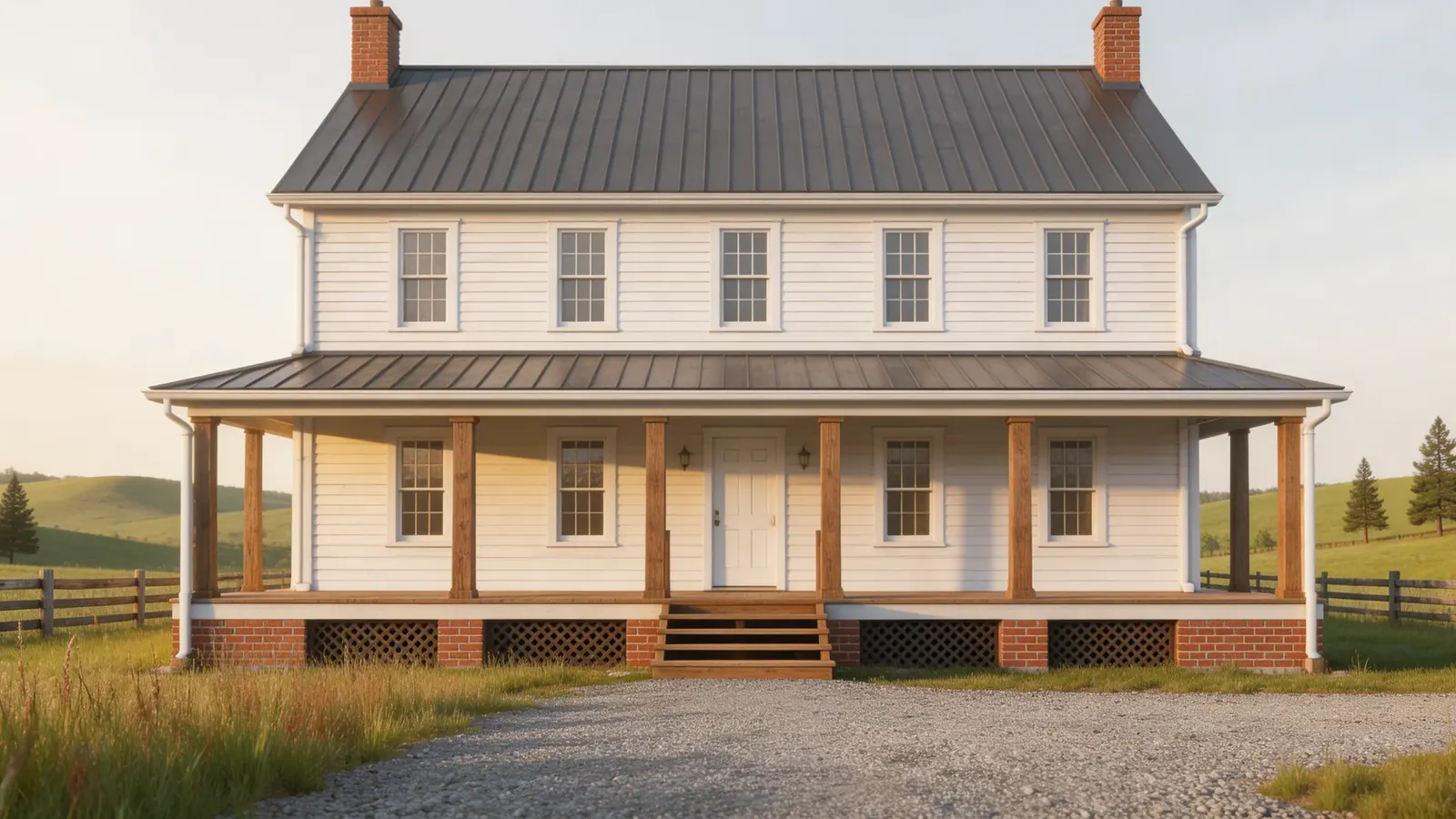
What lives under your floor
A crawl space is the short space between the ground and the first floor of a house. In it you will find the sill plate sitting on the foundation wall, the beams and joists that carry the floor, and the piers that hold up the beams. Ductwork, plumbing and wiring usually run through it too. In older homes around Murfreesboro, Woodbury, Eagleville and Shelbyville, crawl spaces are common. Newer subdivisions lean toward slabs, but plenty of newer homes have crawl spaces as well.
Common structural problems in crawl spaces
- Sagging or bouncy floors from undersized, cut or damaged joists
- Beams that have dropped because a pier under them settled or leaned
- Rotted sill plates where wood sits on damp masonry
- Block or stone piers that are cracked, leaning or sitting on no real footing
- Wood rot or mold on joists from long-term moisture
- Termite or wood-boring insect damage that weakened framing
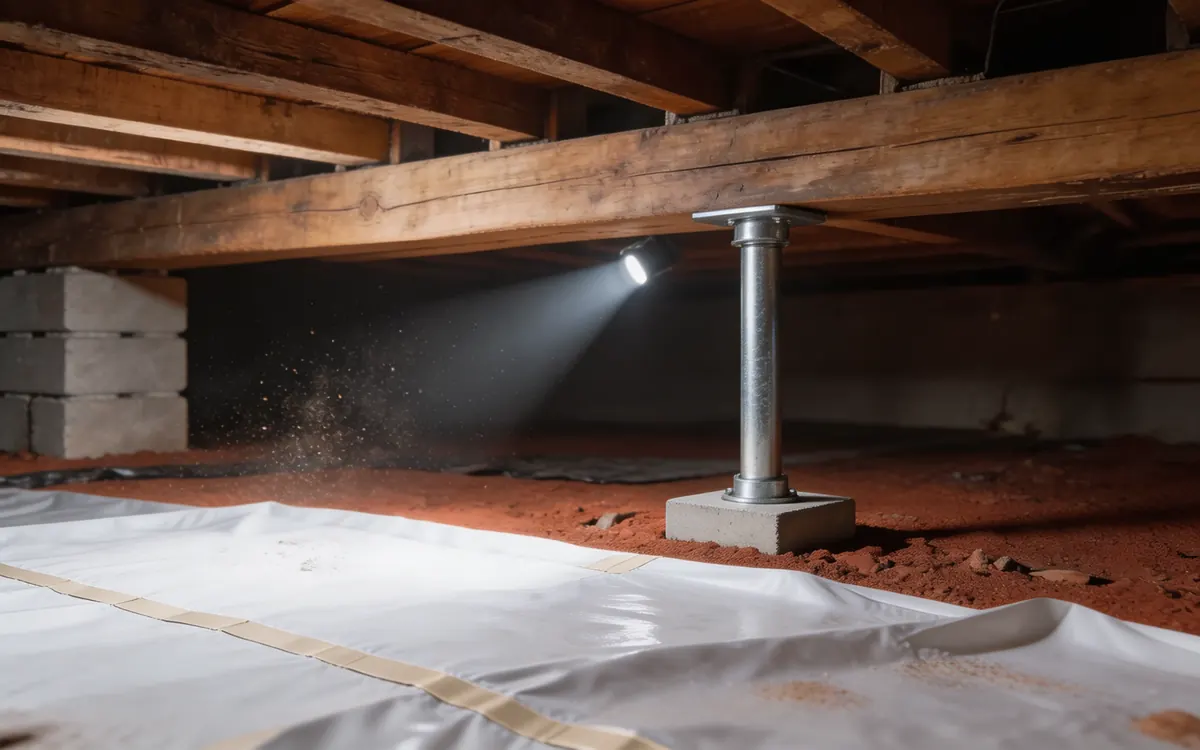
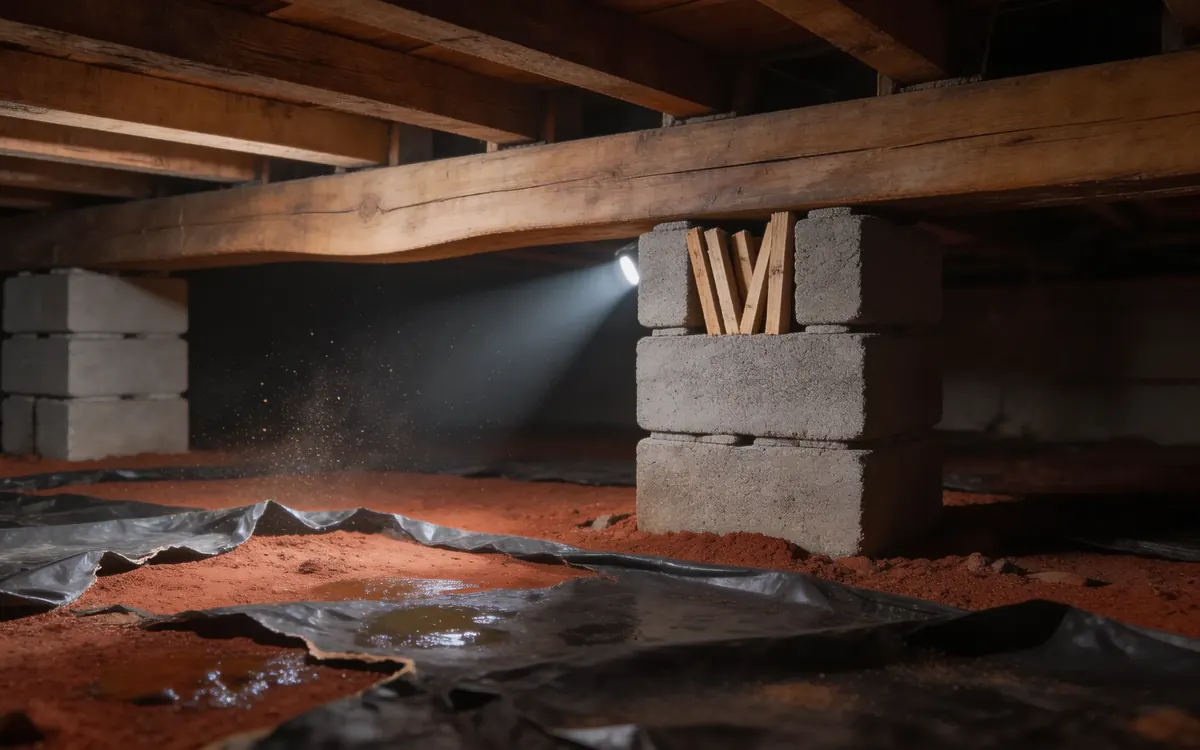
Moisture is usually the root cause
Middle Tennessee summers are humid, and many crawl spaces here sit on clay that holds water after rain. Warm, damp air gets into a cool crawl space and condenses on wood and ductwork. Over years, that raises the moisture content in the framing until rot sets in. Standing water after storms makes it worse. That is why most structural crawl space repairs also include some kind of moisture work.
Signs of a moisture problem include a musty smell inside the house, insulation that is sagging or falling from between joists, white mineral crust on block walls, rusty nails or hangers, and visible water on the ground under the house after it rains.
How crawl space repairs are done
Supporting the structure
For sagging floors, contractors install adjustable steel piers on solid footings, add supplemental beams, or sister new joists alongside damaged ones. Rotted sill plate sections are cut out and replaced. See house leveling for more on lifting and supporting a crawl space home.
Controlling moisture
Moisture work ranges from simple to complete. At the simple end: fix gutters, extend downspouts and regrade so water runs away from the house, then put down a plastic vapor barrier on the ground. At the complete end is encapsulation, where the floor and walls are lined with heavy plastic, vents are sealed, and a dehumidifier keeps the air dry. Some crawl spaces also need a drain and a sump pump.
Replacing damaged wood
Joists and beams that are badly rotted or insect damaged are replaced or reinforced. Anything with active termites should be treated by a pest control company first.
What crawl space repair costs
Costs depend heavily on what is wrong. Angi pier and beam guide, 2026 lists adding new piers at $800 to $4,000 each, beam replacement at $400 to $1,200 each, and waterproofing at $3,000 to $20,000. A small repair, like a few new piers and a vapor barrier, can be a few thousand dollars. A full encapsulation with framing repair can be much more. Get the structural work and the moisture work itemized separately so you can compare quotes.
Before the contractor arrives
If you can safely look in your crawl space, take photos of anything that looks wet, sagging or broken. Note where floors feel soft upstairs. If you can't get in, the contractor will, but they should show you photos of what they found. Be cautious about an estimate for full encapsulation that does not mention the structural issues, or one for structural work that ignores obvious water.
Rutherford County is one of nine Tennessee counties that adopted the state home improvement law. Here, a contractor doing a residential job worth $3,000 to $24,999 needs a home improvement license and a $10,000 surety bond, according to the Tennessee Board for Licensing Contractors. Jobs of $25,000 or more need a full state contractor license anywhere in Tennessee. You can look up any license at verify.tn.gov.