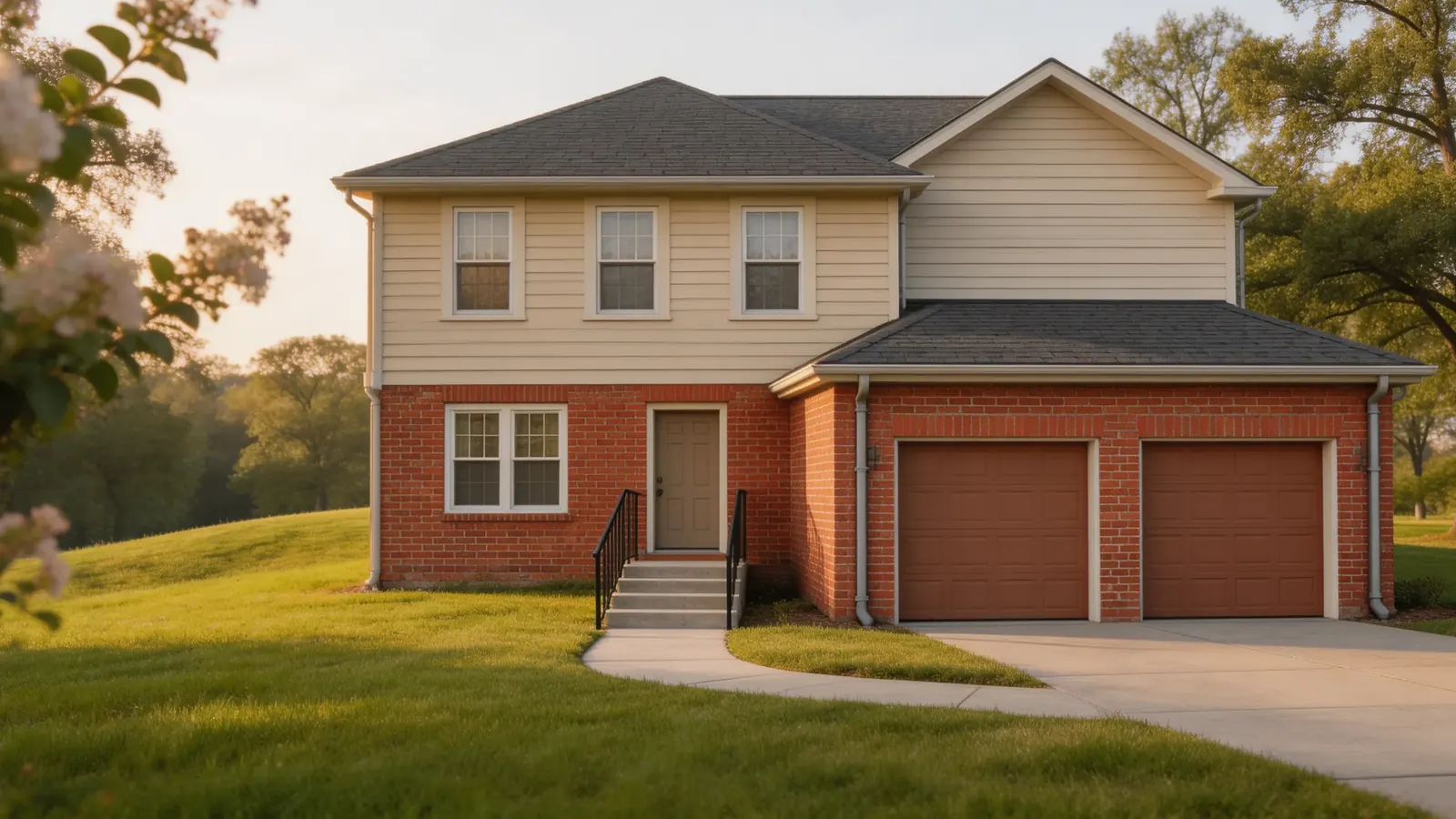
Basements around Murfreesboro
Shallow limestone across much of Rutherford County makes full basements harder and more expensive to dig, so many local homes are on slabs or crawl spaces instead. Basements do exist, especially on sloped lots, in older homes, and in walkout designs where one side of the house is built into a hill. Many crawl space homes also have tall block foundation walls holding back soil on one or more sides. All of these can bow, lean or crack.
Why walls bow and crack
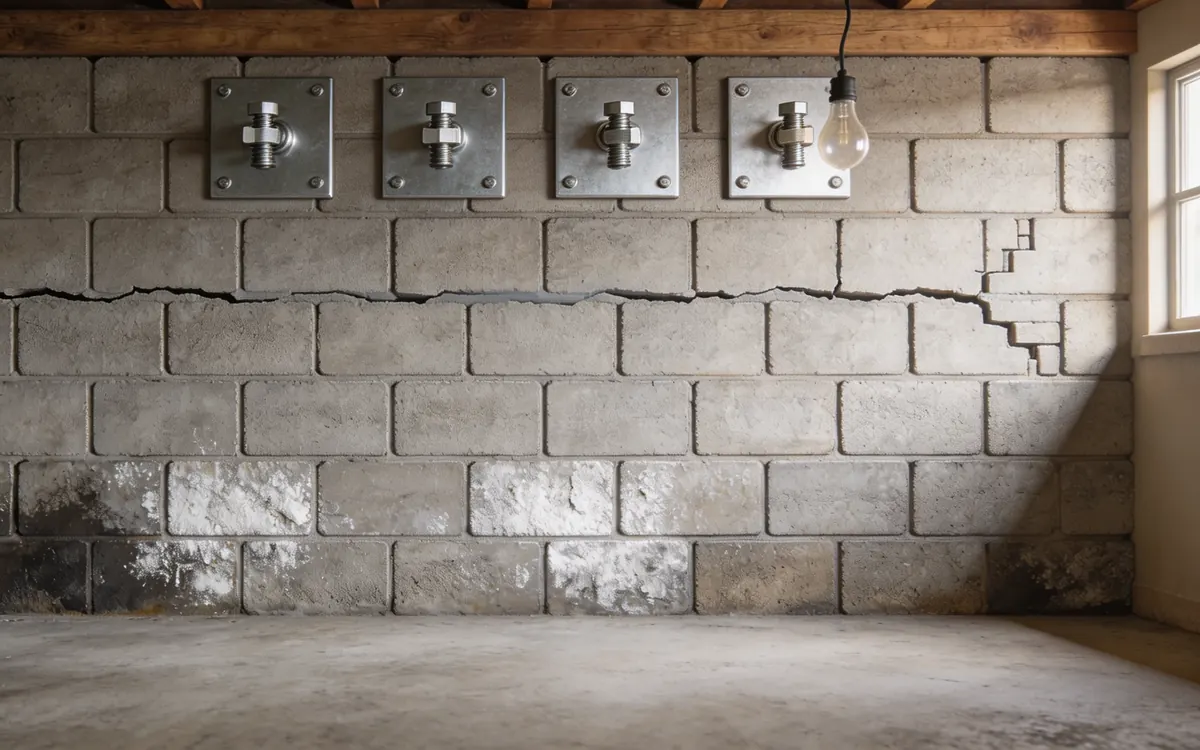
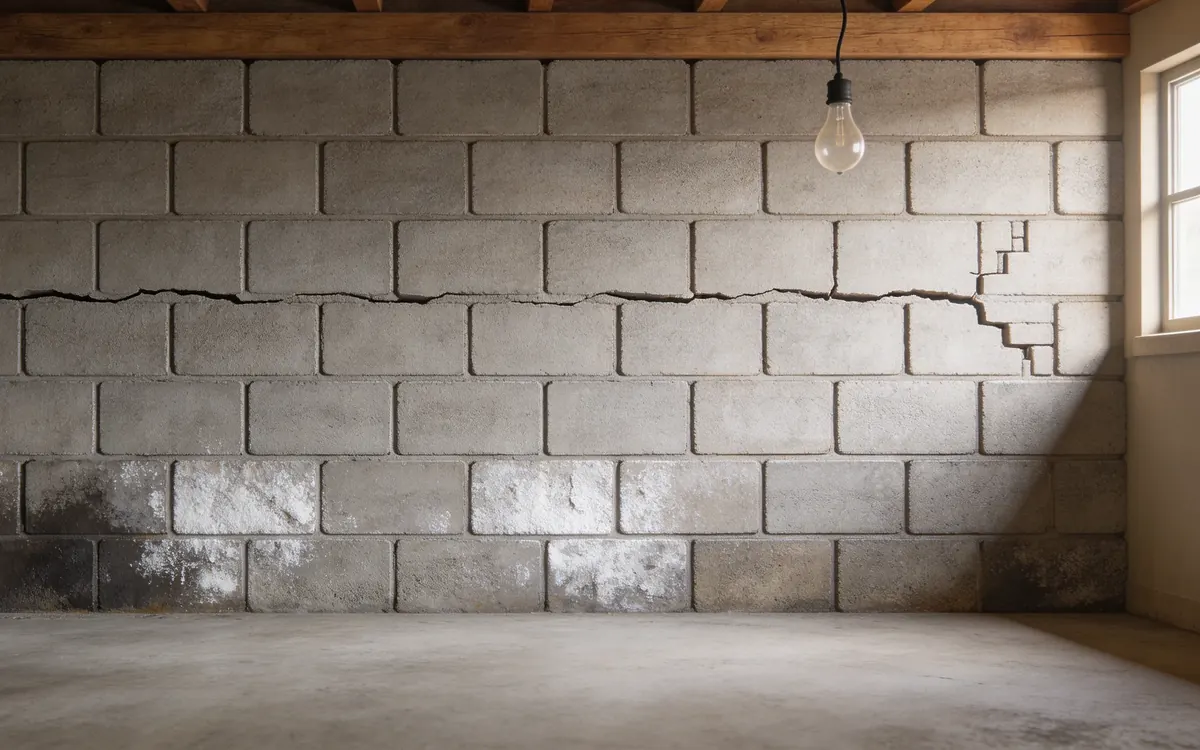
A basement or foundation wall holds back soil. When that soil is clay, it gets heavier and pushes harder as it gets wet, and it can swell as well. Over years, that pressure can push a block wall inward. The usual first sign is a horizontal crack along a mortar joint about halfway up the wall, or a stair-step crack near the corners. Poured concrete walls tend to crack vertically or diagonally instead.
Water makes everything worse. Gutters that overflow, downspouts that empty against the wall, and soil that slopes toward the house all load up the soil right where it does the most damage.
Signs of a wall problem
- Horizontal cracks in a block wall, especially at mid-height
- Stair-step cracks through the mortar near corners
- A wall that leans in at the top or bulges in the middle
- Blocks that have shifted inward compared to the ones above or below
- Water seeping through cracks, or white mineral deposits on the wall
- Gaps between the top of the wall and the floor framing above
Repair options
Carbon fiber straps
For walls that have bowed only a little and are not actively moving, carbon fiber strips can be epoxied to the wall at regular intervals to stop further movement. They are thin and easy to finish over. Angi lists carbon fiber material at about $85 to $250 per foot (Angi, 2026).
Wall anchors
Wall anchors use a steel plate on the inside of the wall connected by a rod to an anchor buried in the yard. Tightening the rod holds the wall and, over time, can pull it back toward straight. They need room in the yard, so they do not suit every lot.
Steel braces
Steel I-beams or channels bolted to the floor and the framing above brace the wall from the inside. They work where there is no room outside for anchors.
Excavate and rebuild
When a wall has moved too far, the soil outside is dug away and the wall is straightened or rebuilt. It is the most expensive option, but it also lets the crew add proper drainage and waterproofing on the outside.
Drainage and waterproofing
Wall repair should almost always come with water control: gutters, downspout extensions, regrading and sometimes an interior or exterior drain with a sump. National guides put waterproofing at roughly $2,000 to $7,000 for typical jobs (HomeAdvisor), and more for full exterior work.
Questions to ask about a wall repair quote
Ask how far the wall has moved, measured in inches at its worst point, and whether the contractor plans to straighten it or only stop it from moving further. Ask what they will do about the water behind the wall, since most bowing starts with wet clay. Then ask whether the anchors or braces come with a written warranty that transfers if you sell.
How urgent is it?
A wall that has a crack but has not moved can usually be watched for a season. Measure and photograph it, and date the ends of each crack. A wall that leans noticeably, has shifting blocks, or has moved since last year needs attention soon. If a wall is bowing fast, keep people away and call a structural engineer.
Rutherford County is one of nine Tennessee counties that adopted the state home improvement law. Here, a contractor doing a residential job worth $3,000 to $24,999 needs a home improvement license and a $10,000 surety bond, according to the Tennessee Board for Licensing Contractors. Jobs of $25,000 or more need a full state contractor license anywhere in Tennessee. You can look up any license at verify.tn.gov.